
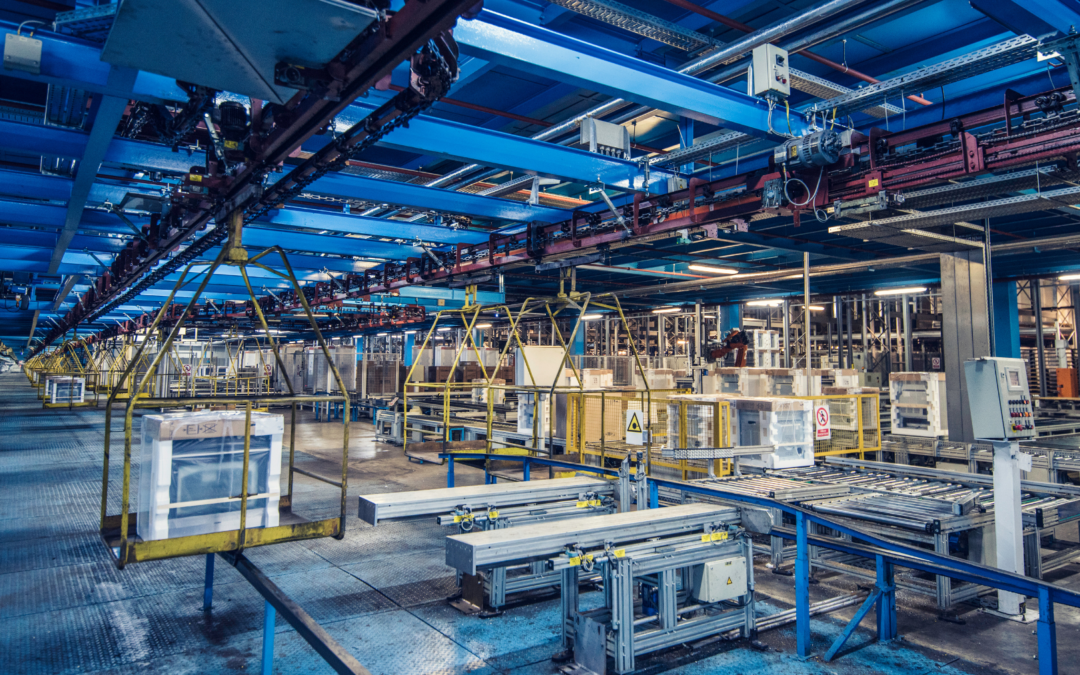
A few years ago, a laptop in the front office and a machine on the production floor had nothing to do with each other. Not anymore. A few years ago, a laptop in the front office and a machine on the production floor had nothing to do with each other. Not anymore. On factory floors across the GTA, business systems and production equipment now share the same network, and that connection is genuinely good for efficiency. It also opens pathways attackers didn’t have before. A compromised office laptop can reach a production server. An unpatched vendor connection can touch scheduling systems. That’s the real risk behind manufacturing cybersecurity today, a practical one built into how connected plants already run. This article breaks down what’s changed, where the gaps are most likely to occur, and what you can do to close them without slowing production.
What Is the Difference Between IT and OT in Manufacturing?
Information Technology (IT) covers the systems that run your business: email, Microsoft 365, servers, accounting platforms, Enterprise Resource Planning (ERP) software, employee computers, and your company network. Operational Technology (OT) covers the systems that run your production floor: industrial equipment, production-line computers, sensors, control systems, and connected machinery.
For a long time, these two worlds stayed separate by default, mostly because they had no reason to talk to each other. That’s changed. The line between IT and OT has already blurred at most GTA manufacturers, whether or not it was ever an intentional decision. This is IT and OT convergence: equipment reports production data back to business systems, cloud platforms pull numbers in from the floor, and remote vendors log in to service machinery. Smart-factory sensors connect straight into the network everyone else uses.
If your plant has grown or modernized in the last several years, chances are this convergence already happened, quietly, one connection at a time. The numbers back it up: more than a third of manufacturers named strengthening IT/OT security architecture a priority for the next five years, according to Rockwell Automation’s 2025 State of Smart Manufacturing survey, and most are managing that shift without a security budget to match.
Where Are the Most Common Manufacturing Cybersecurity Gaps?
The most common manufacturing cybersecurity gaps show up right where the office network and the production floor now meet. Connecting business systems, production data, equipment, and employees makes everything work together more efficiently, but it also opens new pathways between the two. Most GTA manufacturers we talk to have a handful of the same gaps:
- Office and production equipment sharing the same flat network, with nothing separating a compromised laptop from a production-line computer
- Equipment vendors with remote access that isn’t tightly controlled or monitored, sometimes left open long after a service call ends
- Legacy, unsupported operating systems kept running because they’re tied to specialized machinery, and sometimes the computer running that old software is built directly into a costly piece of equipment, not something you can simply swap out
- Limited visibility into everything connected to the network, including every employee’s computer, every sensor, and every piece of equipment reporting back without anyone tracking it
The stakes are concrete. A compromised office account or device can access ERP, Manufacturing Execution System (MES), Computer-Aided Design (CAD), inventory, quality control, or scheduling systems. That means halted production, delayed shipments, and missed customer commitments, not just a data problem sitting in an IT ticket, real costs on the shop floor, well beyond a line item in an IT ticket.
It’s happened to manufacturers already. In August 2025, a ransomware attack on a Washington-based electronics manufacturer took down its shipping, production, and support systems, with no clear timeline for getting back online—the kind of incident that manufacturing ransomware protection is specifically built to prevent. And downtime is already expensive for GTA businesses even without a cyberattack forcing the issue.
IT Security vs. OT Security: What’s the Difference?
IT security and OT security protect different things and prioritize different outcomes. That’s exactly why manufacturers need both to work together, not to be treated as separate problems.
| IT Security | OT Security | |
| Protects | Email, everyone’s computers, devices, cloud platforms, servers, business apps | Equipment, industrial computers, sensors, control systems |
| Priority | Confidentiality and availability | Safety, reliability, and uptime |
| Maintenance | Can often be patched or restarted on a schedule | May be difficult to patch or replace without stopping production |
| Common risk | Phishing and stolen credentials | A failure that affects physical operations, not just data |
Neither one covers the whole picture on its own. Manufacturers need IT security and OT cybersecurity, sometimes called industrial cybersecurity, coordinated together, with someone accountable for how the two connect.
What Does a Day-to-Day Cybersecurity Practice Look Like for Manufacturers?
Manufacturing cybersecurity has moved past “install antivirus and hope.” It’s an ongoing, coordinated practice that touches the whole plant, from the front office to the production floor. Here’s what that looks like in practice:
Visibility and Access Control
- Inventory connected assets: know what’s actually on the network, from office laptops to production-line computers
- Separate networks where appropriate: this is network segmentation—dividing your network into separate zones so a device on one side can’t freely reach everything on the other, keeping office and production traffic from mixing freely. It’s a core piece of manufacturing network security (see our breakdown of the most common network vulnerabilities we see in GTA businesses)
- Control remote vendor access: require approved, monitored methods instead of open remote connections left running indefinitely
- Use multi-factor authentication: wherever it’s technically supported, across both IT and OT systems. According to CISA, enabling MFA makes an account 99% less likely to be hacked
Monitoring, Recovery, and Legacy Systems
- Monitor continuously: rather than waiting for something to break
- Maintain and test backups: a backup you haven’t tested is a guess, not a plan, and it’s one of the most reliable forms of manufacturing ransomware protection
- Document an incident response plan: that accounts for production interruption, not just data recovery
- Use compensating controls for legacy systems: that can’t be patched or replaced right away
You don’t need to rip out every legacy system overnight. Know where the risk sits, and manage it deliberately, on a timeline that works for your production floor.
Manufacturing Cybersecurity, Without Losing Sight of What You Actually Make
Manufacturing cybersecurity works best when it’s built around how your plant actually runs, not against it. That means securing the systems behind your production floor while keeping the line moving, and protecting the specialized equipment that makes your business what it is.
Omega Network Solutions secures the technology environment around your production floor: networks, servers, cloud platforms, remote access, monitoring, backups, planning, and vendor coordination. We’re upfront about what’s in scope and what isn’t. That’s managed IT services for manufacturers in practice, and the same GTA manufacturing IT support we bring to plants across the region.
Manufacturing cybersecurity is an operational risk management function, a shared responsibility among IT, operations, leadership, and vendors. It isn’t a one-time project you check off and forget, revisited as your plant, vendors, and threats change.
Not sure what’s connected to your production network, or who has access to it? A manufacturing cybersecurity assessment gives you a clear picture without disrupting operations to get it. Talk to Omega about IT support for manufacturers.
Frequently Asked Questions
What is manufacturing cybersecurity?
Manufacturing cybersecurity is the set of tools, processes, policies, and monitoring used to protect a manufacturer’s data, business systems, production-supporting technology, and connected equipment from cyber threats. It covers both the office side (IT) and the production side (OT), and increasingly, the connections between them.
What is the difference between IT and OT cybersecurity?
IT and OT cybersecurity protect different priorities: IT security protects email, devices, and business systems to keep information private and available. OT security protects industrial equipment and control systems to keep operations safe, dependable, and running. Manufacturers need both working in coordination.
Can a cyberattack on office systems stop a production line?
A cyberattack on office systems can stop a production line when IT and OT networks share the same network without proper safeguards. One infected device is often enough to disrupt ERP, scheduling, or quality-control systems. Shipments slip. Customer commitments are at risk.
How should manufacturers manage remote vendor access to production systems?
Manufacturers should manage remote vendor access by requiring approved, monitored connection methods instead of open or standing remote access. Access should be granted for specific tasks, tracked while in use, and closed once the work is done, rather than left running indefinitely.
Does manufacturing cybersecurity mean replacing all older equipment?
Manufacturing cybersecurity doesn’t require replacing all older equipment. Many legacy systems can stay in use through compensating controls, such as isolating an unpatchable machine on a restricted segment of the network, while manufacturers plan replacements on a realistic timeline.
How can managed IT services help manufacturers reduce production risk?
Managed IT services help manufacturers reduce production risk by securing the technology environment around production: networks, remote access, monitoring, and backups. Managed IT services for manufacturers provide the visibility and coordination that most internal teams don’t have time to maintain on their own.